Backwards walking treadmill: the low-impact workout for stronger legs and better balance
Most men train by moving forward. We walk forward, run forward, climb forward, chase the next milestone with our chests lifted and our eyes fixed ahead. It is a useful instinct. It is also a narrow one.
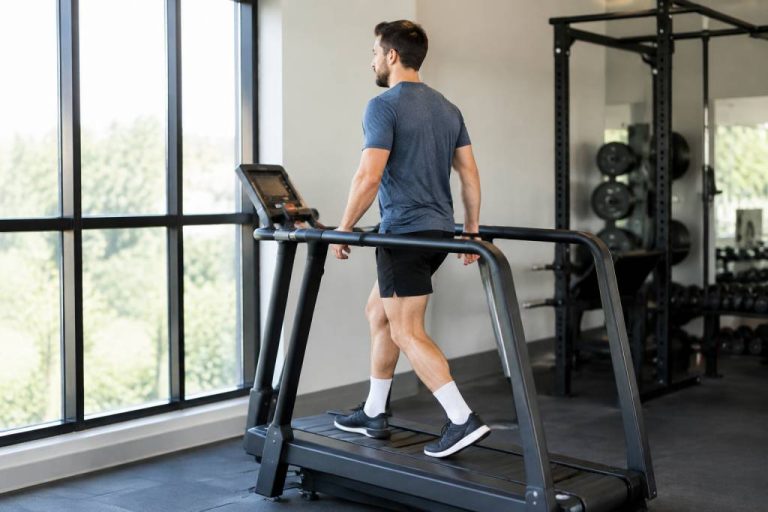
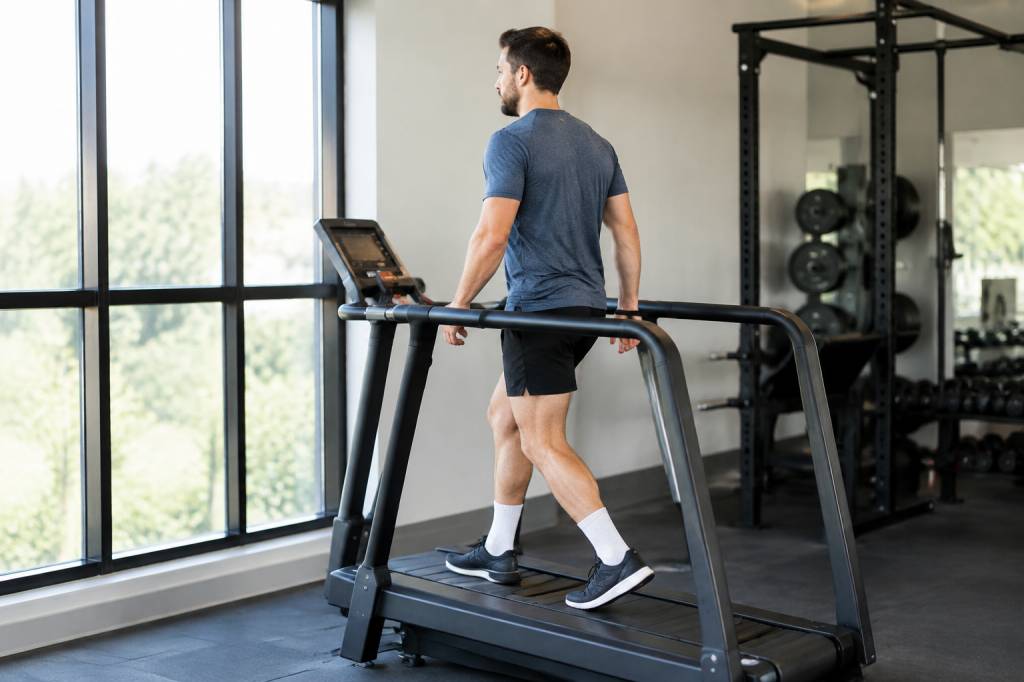
Backwards walking on a treadmill looks almost too simple to be worth your time. There is no heroic weight on the bar, no violent sprint, no dramatic soundtrack required. You turn around, reduce the speed, and walk in the opposite direction. Yet this modest change can challenge your legs, sharpen your balance and strengthen muscles that ordinary walking tends to neglect.
It is low-impact, controlled and surprisingly demanding. After a few minutes, the familiar treadmill becomes unfamiliar ground. Your calves wake up. Your knees begin to negotiate rather than simply absorb. Your brain has to pay attention. That is where the value lives.
Why walk backwards at all?
Walking backwards, sometimes called retro walking, changes the mechanics of every step. When you move forward, your heel usually strikes first and your body rolls towards the toes. Walking backwards encourages a toe-to-heel pattern, placing a different demand on the calves, quadriceps and muscles around the shin.
The result is not magic. It is simply a new movement pattern, and the body responds to novelty. Muscles that spend most of the day sitting quietly are asked to stabilise, control and propel you. Your brain must also process space differently because you cannot rely on your usual visual cues.
That makes backwards treadmill walking useful for three main reasons:
- It builds strength and endurance in the legs without the pounding associated with running.
- It challenges balance, coordination and spatial awareness.
- It introduces variety into a training routine that may have become predictable.
There is also a more practical benefit. Life does not always move in a straight line. You step backwards to avoid someone on a pavement, retreat from a closing door or adjust your feet on uneven ground. Training the body to move in reverse can make those moments feel less awkward and less dangerous.
The muscles that finally get a word in
Forward walking is excellent exercise, but repetition can create blind spots. The quadriceps, hamstrings, glutes and calves all work during normal walking, yet backwards movement alters how they share the load.
The quadriceps often work harder to control the knee and pull the body through each step. The calves help initiate movement and manage the foot as it lowers. The muscles around the ankles and shins are forced to stabilise you. Meanwhile, the glutes and hamstrings contribute to hip control, especially as you maintain an upright position while moving in an unfamiliar direction.
This does not mean backwards walking replaces squats, lunges or loaded carries. It is not a secret doorway to enormous legs. Think of it as a precise tool: useful for strengthening weak links, improving control and preparing your lower body for more demanding work.
For men who spend hours at a desk, in a car or behind a counter, the change can be particularly welcome. Stiff hips and sleepy glutes do not always need punishment. Sometimes they need a different conversation.
Low impact does not mean low effort
The phrase “low impact” is often misunderstood. It does not mean effortless. It means the exercise places less repetitive stress on the joints than activities such as running or jumping. You can still make your heart work and your legs burn without launching your body through space.
Because the pace is usually slow, backwards walking gives you more time to control each foot placement. That makes it attractive for people returning to exercise, building confidence after a period of inactivity or looking for a joint-friendlier conditioning option.
It may also suit experienced athletes who need recovery work without becoming completely passive. A few controlled minutes at the end of a strength session can challenge the lower legs while keeping the nervous system engaged. The session will not look impressive from across the gym. Your legs will not care.
Balance is a full-body skill
Balance is not something you either possess or lose with age. It is a skill that can be trained, neglected and rebuilt. Backwards walking exposes the difference between standing still and truly controlling your body.
When you walk backwards, you cannot casually watch the path ahead. Your feet need more accurate feedback from the ankles, knees and hips. Your posture has to remain organised. Your core muscles work quietly to prevent excessive twisting or leaning. The brain begins mapping movement through sensation rather than vision alone.
This is why the exercise can feel strangely intense despite the low speed. The muscles are not merely pushing you forward; they are negotiating uncertainty. A treadmill belt moving beneath your feet adds another layer. You must stay calm, deliberate and present.
There is a lesson in that. Balance is not the absence of instability. It is the ability to respond when stability is threatened.
How to start without making a mess of it
The first rule is simple: use the handrails when you need them. The second rule is just as important: do not treat the exercise like a test of courage. The goal is controlled movement, not a dramatic fall that gives the gym something to discuss.
Begin with the treadmill switched off. Stand on the side rails, turn carefully and practise stepping backwards on the stationary belt. Get used to the foot pattern and the feeling of looking over one shoulder without rotating your whole body.
When you are ready, start at a very slow pace. For many people, 1 to 2 miles per hour is more than enough at first. Hold the front handles lightly if necessary, keeping your arms available for balance rather than gripping for survival.
Use short steps. Keep your chest lifted, your knees soft and your gaze directed over one shoulder. Avoid turning your head sharply from side to side every few seconds. Instead, choose a comfortable angle and periodically check your surroundings while maintaining control.
A useful beginner format looks like this:
- Warm up with five minutes of normal forward walking.
- Reduce the treadmill to a slow pace and walk backwards for 30 seconds.
- Return to forward walking for 60 to 90 seconds.
- Repeat for four to six rounds.
- Finish with an easy forward walk and gentle mobility work.
That is enough. You do not need to begin with twenty minutes of reverse suffering. Your nervous system is learning a new language. Give it time to form the words.
Progressing the challenge
Once backwards walking feels controlled, progress one variable at a time. Increase the duration before increasing the speed. Add thirty seconds to each interval, or build towards five minutes of continuous walking. If your posture breaks down, the pace is too high or the session is too long.
You can also introduce a slight incline, but only after you have developed confidence on a flat belt. An incline increases the demand on the calves and quadriceps and can quickly turn a controlled drill into a desperate shuffle. Keep the speed low and use the handrails if needed.
A sensible progression might look like this:
- Week one: five rounds of 30 seconds, slow pace, flat treadmill.
- Week two: five rounds of 60 seconds, maintaining smooth foot placement.
- Week three: three rounds of two minutes, with relaxed forward walking between them.
- Week four: add a small incline or extend the intervals, but not both at once.
Progress should feel like ownership, not panic. If you need to cling to the rails, shorten the interval. If your steps become noisy and rushed, slow down. Quiet feet are usually a good sign.
Where it fits into a proper workout
Backwards treadmill walking can stand alone as a short conditioning session, but it works particularly well in three places.
First, use it as part of a warm-up. After a few minutes of forward walking, add short reverse intervals to wake up the ankles, knees and hips before lower-body strength work. Keep the effort light. A warm-up should prepare you, not drain the battery.
Second, place it at the end of a gym session. After squats, deadlifts or lunges, a few slow intervals can train control while your legs are already fatigued. Be conservative here. Fatigue makes balance harder, and the treadmill is not the place for bravado.
Third, use it on a recovery day. Combine five to ten minutes of easy reverse walking with mobility exercises for the hips, ankles and thoracic spine. This creates a session that is gentle on the joints but still asks you to show up.
A simple lower-body session could include:
- Five minutes of forward treadmill walking.
- Bodyweight squats and controlled reverse lunges.
- Three to five short backwards walking intervals.
- Calf raises and single-leg balance work near a stable support.
- Easy forward walking to settle your breathing.
The mistakes that ruin the exercise
The most common error is moving too quickly. Speed creates the illusion of progress, but backwards walking rewards precision. If you are bouncing, reaching or constantly grabbing the rails, reduce the pace.
Another mistake is leaning backwards. It feels instinctive, especially when the belt begins to move, but it shifts your centre of gravity and makes each step less stable. Keep your torso tall and your hips stacked beneath you.
Do not take huge steps. Long strides can cause the foot to land too far in front of your centre of mass, forcing the knee and ankle to absorb more stress. Small, deliberate steps are safer and more effective.
Finally, do not turn the exercise into a performance. You are not auditioning for a sports science documentary. The man beside you may stare for ten seconds, then return to his phone. Your job is to train, not entertain.
Who should be cautious?
Most healthy adults can experiment with backwards walking at a slow pace, but it is not appropriate for everyone without guidance. If you have significant knee, hip or ankle pain, recent surgery, severe balance problems, neurological symptoms or a history of falls, speak with a qualified medical professional or physiotherapist first.
Stop immediately if you feel sharp pain, dizziness, unusual weakness, chest discomfort or a loss of control. Muscle fatigue is normal. Pain that changes your movement is not a badge of honour.
If you are unsure, begin with a stationary drill while holding a stable support, or practise backwards walking on a clear, flat surface with someone nearby. The treadmill adds a moving belt and should be treated with respect.
A small reversal with real value
There is something quietly humbling about backwards walking. It strips away the smooth confidence we bring to familiar movement. For a few minutes, you become aware of every foot placement, every shift in the hips, every small correction at the ankle.
That awareness is the training. Stronger legs matter, but so does the ability to move through the world with more control. Better balance can support your lifting, your sport and the unremarkable moments that make up most of a life: stepping off a kerb, changing direction, carrying weight across uneven ground.
Turn the speed down. Let the ego stay in the changing room. Walk backwards for a minute and pay attention to what your body has been ignoring. It may be the simplest difficult thing you do all week.
À propos de l'auteur