


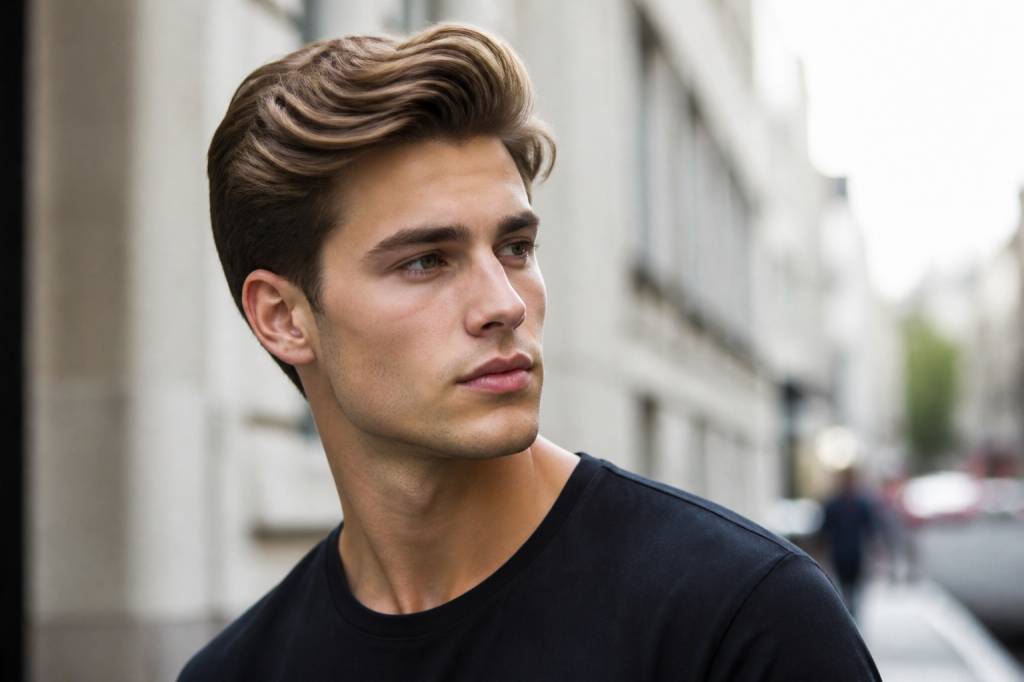
Your haircut is the frame around your face. It can sharpen your features, soften them, add edge, or quietly suggest that you gave up somewhere between the alarm clock and the bathroom mirror. You do not need a dramatic transformation to look better. You need a cut that understands your face, your hair, and the life you actually live.
The right hairstyle should survive a crowded commute, a long day at work, a late drink, and the occasional morning when your grooming routine consists of staring into the mirror and negotiating with reality. It should feel like you—not a costume borrowed from a celebrity with a private barber.
These are some of the most attractive hairstyles for men right now: versatile, masculine, and practical enough for everyday life. Each one can elevate your style without demanding that you become a full-time servant to your hair.
The textured crop: sharp without looking overworked
The textured crop remains one of the most reliable cuts for men who want a clean silhouette with a little disorder on top. The sides are usually tapered or faded, while the top is cut with enough variation to create movement. It is controlled, but not rigid. Think of it as structure with room to breathe.
This style works particularly well for men with straight to slightly wavy hair. The texture breaks up a flat shape and gives the haircut a more natural finish. A small amount of matte clay or styling paste is usually enough. Rub it between your palms, work it through dry hair, and push the fringe forward or slightly to one side.
- Best for: Oval, square, and heart-shaped faces.
- Hair type: Straight, fine, or lightly wavy hair.
- Maintenance: A trim every three to five weeks.
- Styling tip: Avoid shiny gel. The crop looks better with a dry, lived-in finish.
The textured crop is especially useful if your hairline is beginning to retreat. A short, broken-up fringe can make thinning around the temples less obvious than a desperate attempt to comb everything across the battlefield.
The modern fade: clean lines, strong presence
A fade is less a hairstyle than a foundation. It gradually reduces the length of the hair around the sides and back, creating a clean transition from skin or very short stubble into longer hair above. Low, mid, and high fades all produce different effects.
A low fade is discreet and polished. It keeps more weight around the sides, making it suitable for offices and conservative environments. A mid fade feels more contemporary, while a high fade creates a stronger contrast and a more athletic, assertive appearance.
Pair the fade with a textured top, a short quiff, curls, or even a simple side part. The versatility is the point. The fade gives your face definition, particularly around the temples and jawline, while the longer top lets you decide how much personality to bring into the room.
There is one warning: fades grow out quickly. That crisp gradient will not remain crisp forever. If you want the cut to look intentional rather than accidental, book regular appointments. Your barber should also know exactly how high you want the fade. “Short on the sides” is not a specification. It is an invitation to regret.
The classic side part: quiet confidence
Some hairstyles do not need to shout because they have already survived several decades of men trying to improve on them. The side part is one of those styles. It is clean, adaptable, and quietly masculine without becoming stiff.
The modern version is less glossy than the traditional business cut. Ask your barber for a natural part with tapered sides and enough length on top to style with your fingers. A lightweight cream or low-shine pomade will keep the shape in place without making your hair look dipped in lacquer.
The side part suits men who move between different settings: office, dinner, weekend pub, first date, difficult family gathering. It can be neat when necessary and slightly rougher when you let a few strands fall out of place.
- Use a comb for a sharper, more formal finish.
- Use your fingers for a softer and more relaxed look.
- Blow-dry the roots in the direction of the part for longer-lasting volume.
- Do not force a part where your hair naturally refuses to cooperate.
A good part should work with your growth pattern, not against it. The barber’s job is not merely to remove hair. It is to understand how your hair behaves when left alone.
The short quiff: height without theatre
The quiff adds lift at the front while keeping the sides neat. It has energy, but it does not have to look like you are auditioning for a boy band. The key is restraint. A little height gives the face more length and creates a confident profile. Too much height turns the whole arrangement into architecture.
This is a strong option for men with round or shorter face shapes because the vertical movement balances the proportions. It also works well for medium-density hair that can hold a shape without requiring half a tin of product.
After washing, towel-dry your hair and apply a small amount of volumising mousse or styling cream. Blow-dry the front upward and slightly back, using your fingers or a vent brush. Finish with matte clay or a light hairspray if your hair tends to collapse by lunchtime.
The short quiff is at its best when it retains texture. Do not flatten every strand into submission. The imperfections are what stop it from looking manufactured.
The crew cut: discipline with very little maintenance
The crew cut is stripped back, practical, and difficult to ruin. Hair is kept short on the sides and slightly longer on top, allowing the head to retain shape rather than becoming a featureless patch of stubble. It is a cut for men who prefer their morning routine to involve coffee, not engineering.
It suits active lifestyles, receding hairlines, and men who dislike the feeling of hair falling across their face. It also places more attention on your facial features, so eyebrows, skin, and beard maintenance suddenly matter more. A short haircut removes the distractions. There is nowhere for poor grooming to hide.
Ask for a gradual taper rather than an aggressive skin fade if you want a softer, more timeless result. For a sharper appearance, keep the neckline and sideburns clean. For a rugged look, allow a little growth and let the haircut lose some of its precision.
The crew cut is not boring. It is honest. It tells the world you are not depending on hair to create an identity.
The medium-length flow: relaxed, but not careless
Medium-length hair has become a strong choice for men who want movement and character. It can frame the face, soften a strong jaw, and create an effortless appearance—provided you understand the difference between relaxed and neglected.
The best medium-length cuts are shaped around the natural fall of the hair. Layers remove unnecessary weight and help the style move rather than sit like a heavy curtain. This is particularly effective for wavy or thick hair, which can become bulky if cut into one solid length.
Use a light leave-in conditioner or sea salt spray to enhance texture. Let the hair dry naturally when possible. If you use a hairdryer, keep the heat moderate and direct the airflow downward to reduce frizz.
- For straight hair: Add subtle layers and use a lightweight texture spray.
- For wavy hair: Use curl cream or leave-in conditioner to define the natural movement.
- For thick hair: Ask for internal layering to remove weight without making the ends look thin.
- For fine hair: Avoid heavy products that drag the hair down.
Medium-length hair demands patience. The awkward growing-out stage is real. You will spend a few weeks looking as though you have joined a struggling band. Keep going. Once the shape settles, the reward is a style with movement and individual character.
The buzz cut: direct and uncompromising
The buzz cut leaves nowhere to hide. That is precisely why it can be so powerful. With the hair reduced to a short, even length, attention moves to the face, head shape, skin, and posture. It is minimalism with teeth.
A single length all over is the most severe version. A slightly longer top with tapered sides creates more balance and gives the cut a modern finish. If you have a strong jaw, defined cheekbones, or a well-kept beard, the buzz cut can make those features stand out immediately.
Before committing, consider your head shape and any scars, ridges, or areas of uneven density. There is no shame in discussing these with your barber. The point is not to follow some abstract idea of masculinity. The point is to leave the chair feeling more like yourself.
Use sunscreen on the scalp if your hair is very short. The sun has no respect for your aesthetic ambitions.
The curly taper: let the texture do the work
Curly hair should not be treated as a problem waiting to be flattened. The right cut allows the curls to create volume, shape, and personality. A curly taper keeps the sides and neckline clean while preserving length on top, giving the style definition without sacrificing its natural movement.
The most important factor is finding a barber who understands curls. Hair often appears shorter once dry, and cutting it aggressively while wet can result in an unwanted surprise. Ask for shape, not simply reduced length.
For styling, apply curl cream or a lightweight moisturising gel to damp hair. Scrunch gently, then allow it to air-dry or use a diffuser on low heat. Avoid brushing dry curls unless your goal is to create a cloud of violence around your head.
Regular conditioning is essential. Curly hair tends to be drier because natural oils have a harder time travelling along the bends of the hair shaft. Healthy curls look better than heavily styled curls every time.
The slick back: controlled, dangerous, and easy to misjudge
The slick back carries a certain tension. It can look elegant, rebellious, or slightly threatening depending on the cut, the product, and the man wearing it. It works best with medium-length hair on top and tapered or undercut sides.
For a modern version, avoid soaking the hair in high-shine pomade. Choose a water-based product with medium hold and moderate shine, or use a matte cream for a softer interpretation. Comb the hair back while it is damp, then allow some natural texture to remain.
This style is particularly effective for evening wear, leather jackets, tailored coats, and moments when you want your appearance to feel deliberate. It is less forgiving after a helmet, heavy rain, or an emotional encounter with strong wind.
If your hair is thinning at the crown, a slick back may draw attention to it. In that case, a textured side sweep or shorter crop will usually be more flattering.
How to choose the right hairstyle for your face
Your face shape is useful guidance, not a prison sentence. Hair can create balance by adding height, reducing width, or softening sharp angles.
- Oval faces: Most styles work. Experiment with texture, length, and direction.
- Round faces: Add height on top and keep the sides tighter to create a longer appearance.
- Square faces: Short cuts, textured crops, and classic side parts complement a strong jaw.
- Long faces: Avoid excessive height. Medium length and fuller sides can create balance.
- Heart-shaped faces: A textured fringe or medium-length style can soften a wider forehead.
- Diamond faces: Layered styles and natural volume help balance prominent cheekbones.
Your hairline, density, lifestyle, and willingness to style matter just as much. A perfect cut on paper is worthless if you hate maintaining it. Be honest with yourself. If you will not spend more than three minutes on your hair, choose something that looks good with three minutes of effort.
The details that make the haircut work
A strong hairstyle is only half the equation. The finish matters. Keep the neckline clean, but do not obsess over sharp lines if your overall look is relaxed. Maintain the sideburns so they connect naturally with your beard or stubble. Trim unwanted neck hair between barber visits.
Wash your hair according to its needs, not according to panic. Daily shampooing can dry out some hair types, while oily scalps may require more frequent washing. Use conditioner, especially if your hair is curly, thick, bleached, or exposed to cold weather and heated rooms.
Invest in one good styling product rather than collecting six abandoned jars beneath the sink. Matte clay suits short textured styles. Cream works well for medium-length hair. Pomade adds control and shine. Sea salt spray creates movement but can become drying if overused.
Most importantly, take a reference photo to your barber and explain how much time you are willing to spend styling the cut. The best hairstyle is not the one that looks impressive for five minutes in the shop mirror. It is the one that still makes sense when you are standing in your bathroom, half-awake, with one sock on and the day already demanding something from you.