


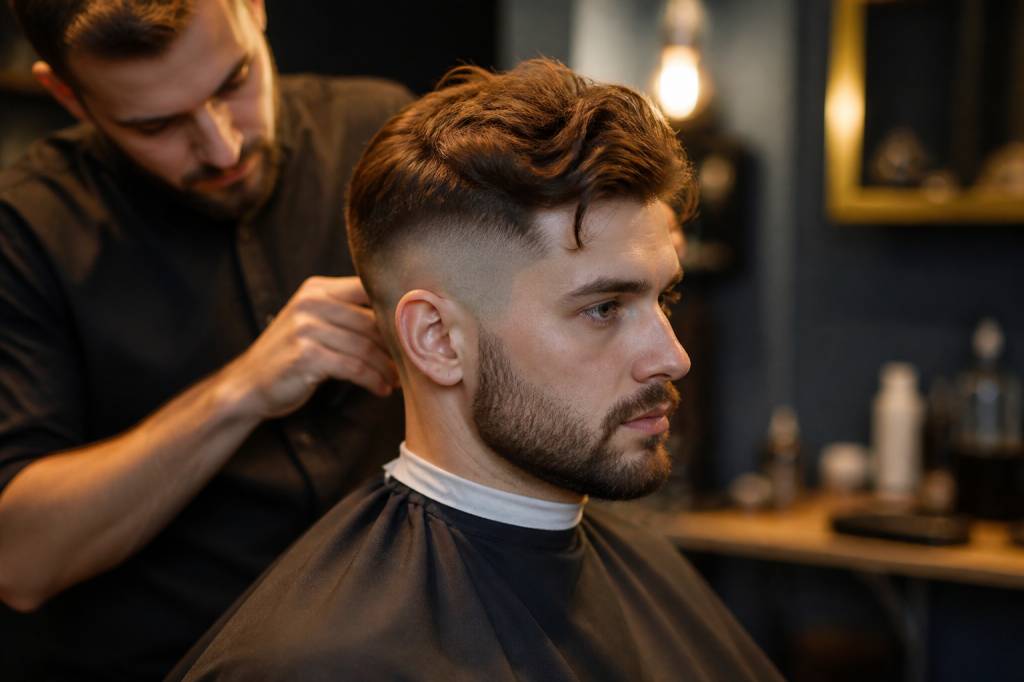
Your haircut is not a minor detail. It is the first signal people read before you speak—the line of your jaw sharpened by a fade, the weight of your fringe, the deliberate mess that says you have better things to do than stare at a mirror for forty minutes.
This year’s strongest men’s haircuts are not about chasing every trend that appears on your feed. They are about choosing a shape that works with your face, your hair texture and the life you actually live. A great cut should survive a crowded commute, a late night, a run through the rain and the occasional morning when your alarm becomes an enemy.
From controlled classics to rougher, more expressive styles, these are the haircuts worth considering if you want to elevate your look without turning your bathroom into a laboratory.
The modern textured crop
The textured crop remains one of the most reliable choices for men who want style without unnecessary ceremony. It is short around the sides, slightly longer on top and cut with enough texture to create movement rather than a rigid helmet.
The key is restraint. The top should look lived-in, not attacked by a hedge trimmer. Ask your barber for choppy layers and a fringe that can sit naturally across the forehead. A matte clay or texture powder will give the hair grip while keeping the finish understated.
This cut works particularly well for straight, wavy and moderately thick hair. If your face is round, leave a little height on top to elongate the proportions. If you have a longer face, keep the fringe slightly heavier and avoid excessive height.
- Best for: straight, wavy or thick hair
- Face shapes: oval, square, round and heart-shaped
- Maintenance: trim every four to six weeks
- Styling: matte clay, sea salt spray or texture powder
It is the haircut equivalent of a well-worn leather jacket: adaptable, masculine and difficult to make look completely wrong.
The low taper fade
Not every man wants the sides of his head shaved into oblivion. The low taper fade offers a cleaner silhouette while keeping a little weight around the temples and above the ears. It is subtle, polished and far easier to wear in professional settings than a dramatic skin fade.
The taper gradually narrows the hair around the sideburns and neckline. The result is tidy without looking overly engineered. It pairs well with almost any top length, from a short crop to a loose quiff or medium-length sweep.
Ask your barber to keep the fade low and blended. The transition should feel seamless rather than visibly striped. That distinction matters. A good taper disappears into the haircut. A bad one announces itself from across the room.
This is a strong option for men who want to look sharper without abandoning their natural hairline. It also grows out gracefully, which is useful if regular barber visits are more of an aspiration than a consistent habit.
The short textured quiff
The classic quiff has been through enough reinventions to qualify for a pension, but it remains one of the most attractive men’s haircuts for a reason. It adds height, frames the face and gives even a simple outfit a stronger presence.
This year, the best version is shorter and less glossy than the exaggerated rockabilly styles of the past. The sides can be tapered or faded, while the top is left long enough to lift and push back. Texture matters more than volume. You want controlled movement, not a hairstyle that appears to be fleeing your forehead.
After washing, apply a small amount of pre-styler or sea salt spray. Blow-dry the front upwards and slightly back, then finish with a matte paste. Use your fingers instead of a comb if you want a more relaxed result.
The short quiff suits oval, square and diamond-shaped faces particularly well. Men with very fine hair should avoid loading it with heavy pomade, which can flatten the style and expose more scalp than intended.
The modern buzz cut
There is nowhere for a buzz cut to hide. That is precisely its appeal. It removes distraction and places the focus on your facial structure, beard, skin and posture. It is direct, practical and quietly confrontational.
The contemporary version does not have to mean one uniform length across the entire head. A slightly longer top with a soft taper around the sides creates more shape and avoids the military-recruit effect. You can also pair it with a clean shave, short beard or defined stubble depending on the character you want to project.
Before committing, consider your head shape and any scars, bumps or areas of uneven density. A good barber can advise on the most flattering length. Clippers do not negotiate, so choose carefully before the first pass.
A buzz cut also exposes the scalp to the elements. Use sunscreen on sunny days and keep the scalp moisturised. Yes, even if you consider skincare suspiciously close to witchcraft.
The French crop with a longer fringe
For men who want a haircut with attitude but not excessive maintenance, the French crop is a compelling choice. Its defining feature is the forward fringe, usually paired with short sides and a textured top.
A longer fringe adds personality and can help balance a high forehead. It also gives the haircut a slightly rebellious edge, especially when worn with uneven texture rather than a perfectly straight line. The sides can be faded for contrast or kept softer for a more natural look.
This style is excellent for thick hair because the texture reduces bulk. It can also work for fine hair when cut strategically, although excessive thinning may make the top appear weaker. Ask your barber to remove weight without destroying density.
For styling, rub a small amount of matte paste between your palms and work it through from the back forward. Finish by pinching a few sections of the fringe. The objective is imperfection with direction.
Medium-length hair with natural movement
Short hair is not the only route to a sharper appearance. Medium-length styles are gaining ground because they allow more movement, more individuality and a little less obedience to convention.
The strongest version sits between the cheekbones and shoulders, with layers cut into the shape to prevent it becoming heavy. The hair should move when you do. A blunt, shapeless block will make even a good face look tired.
This cut is especially effective for men with wavy or curly hair. Ask for layers that respect your natural pattern rather than forcing every strand into submission. A curl cream or lightweight leave-in conditioner can define the texture without creating a wet, artificial finish.
Men with straight hair can create movement with a salt spray and a rough blow-dry. Avoid brushing it into perfect symmetry. A little disorder gives the style life.
- Best for: wavy, curly or thick straight hair
- Face shapes: oval, rectangular and square
- Maintenance: shape every eight to twelve weeks
- Styling: curl cream, light conditioner or sea salt spray
The slick back, stripped of excess
The slick back has a reputation for being either brilliantly elegant or dangerously close to a nightclub villain. The difference lies in the finish. Modern versions are less greasy, less rigid and more natural.
Keep the sides tapered rather than severely disconnected, and leave enough length on top to sweep the hair back without forcing it flat. A low-shine pomade or styling cream will provide control while allowing the hair to retain some texture.
This cut works best with medium to thick hair. If your hairline is receding, avoid pulling everything tightly backward. A softer side part or slightly broken finish will look more natural and create better balance.
The slick back is at its best when it appears intentional but not precious. Wear it with a tailored jacket, a plain T-shirt or the quiet confidence of a man who has stopped asking permission.
The classic side part
Some haircuts survive because they are dependable. The side part is one of them. It brings structure to the face, works across generations and can be adapted to almost any environment.
For a contemporary feel, avoid an overly hard part unless you genuinely enjoy maintaining a sharp line. A natural part with a taper around the sides looks cleaner and less theatrical. The top should have enough length to sweep across but not so much that it collapses under its own weight.
Use a small amount of styling cream for a relaxed finish or a light pomade for more definition. Comb the hair into place while damp, then leave a little separation through the front with your fingers.
The side part is particularly effective for oval, square and rectangular faces. It can also help create the impression of width on narrow faces, depending on where the part is placed.
The curly taper
Curly hair should not be punished into submission. The curly taper keeps the sides neat while allowing the natural texture on top to become the centre of the look.
The shape depends on clean edges and healthy curls. Ask for a gradual taper around the temples and neckline, with enough length left on top to show the curl pattern. Avoid excessive thinning, which can create frizz and destroy the shape.
After washing, apply curl cream to damp hair and scrunch gently. Let it air-dry or use a diffuser on low heat. Touching the curls repeatedly while they dry is a reliable way to create unnecessary frizz, so resist the urge to interfere.
Regular conditioning is essential. Curly hair tends to be drier because natural oils have a harder time travelling along the bends of each strand. A haircut can improve the shape, but hydration keeps the whole thing from looking like a weather event.
The wolf cut, made wearable
The wolf cut sits somewhere between a shag and a layered mullet. It is expressive, slightly feral and ideal for men who are tired of every hairstyle looking like it came from the same showroom.
Its defining features are layers, volume around the crown and a softer, longer shape toward the back. The wearable version avoids extreme disconnection. The layers should flow rather than appear randomly hacked into place.
This cut works best on medium to thick hair, especially when there is some natural wave. It requires a little confidence because it will not always behave identically from one day to the next. That is part of the point.
Use a lightweight mousse or texture spray, then allow the hair to dry naturally. A small amount of styling paste can define the ends, but heavy products will kill the movement that gives the cut its character.
How to choose the right haircut
A photograph can inspire you, but it cannot account for your hairline, density, cowlicks or daily routine. Bring a reference image to your barber, then discuss how it can be adapted to your head rather than demanding an exact replica.
Consider these practical questions before you sit in the chair:
- How much time are you willing to spend styling your hair each morning?
- Does your hair naturally grow straight, wavy, curly or in several directions at once?
- Do you need a cut that works in a conservative workplace?
- Are you prepared to maintain a fade every two or three weeks?
- Do you want to work with your hairline or constantly fight it?
Your face shape matters, but it is not a prison sentence. Texture, proportion and confidence often matter more than rigid rules. The best haircut creates balance. It should frame your face, support your features and make you feel more like yourself—not like a stranger wearing a costume.
The grooming details that make the cut work
Even the finest haircut loses impact when the basics are neglected. Wash according to your hair type rather than following a fixed ritual. Oily scalps may need more frequent cleansing, while dry or curly hair often benefits from fewer washes and more conditioning.
Do not use a fistful of product. Start with a pea-sized amount, warm it between your palms and add more only if necessary. Most men do not need stronger products; they need less of them.
Keep the neckline and around the ears tidy between appointments if you know how to do so safely. Otherwise, leave the maintenance to your barber. A rushed attack with kitchen scissors can transform a sharp cut into evidence.
Finally, remember that style is not about looking untouched. The most attractive haircut is one that appears connected to the man wearing it: his work, his habits, his face, his history. Choose a shape with enough structure to elevate you and enough freedom to remain alive.
This year, take the chair with a clear idea, listen to the barber who understands your hair and leave with something that can withstand real life. The right cut will not change who you are. It will simply make the outside stop arguing with the inside.