


Alex Turner has never dressed like a man trying to be noticed. That is precisely why people notice him.
From the sharp, swaggering tailoring of Arctic Monkeys’ early years to the velvet lounge suits, Cuban collars and desert-rock silhouettes of his later work, Turner has built a wardrobe that feels instinctive rather than engineered. His clothes look lived in. Even when the outfit is precise, there is usually something loose at the edges: an open shirt, a worn leather jacket, a pair of boots carrying the dust of imaginary highways.
That tension is the secret. Alex Turner fashion is not about copying every item he has ever worn. It is about understanding the attitude beneath the clothes: confidence without desperation, retro references without costume-shop theatre, and enough restraint to let one strong piece do the talking.
Want to recreate his effortlessly iconic style? Start by forgetting the word “effortless”. The best relaxed wardrobes are usually built with ruthless attention to proportion, texture and detail.
The evolution of Alex Turner’s style
Turner’s style has moved through several distinct phases, but the underlying character has remained remarkably consistent. He is drawn to clothes with history, drama and a little danger.
In the early Arctic Monkeys era, the look was rooted in British indie: slim jeans, leather jackets, fitted T-shirts, desert boots and narrow silhouettes. It was youthful, direct and slightly scruffy, with the energy of a band that had just walked out of a Sheffield pub and onto a stage.
Then came a more polished period. Tailored suits, brogues, Chelsea boots and slicker grooming entered the picture. Turner began to look less like a guitarist in a smoky venue and more like a modern rockabilly figure who might know exactly where the best late-night bar was.
During the AM era, the formula became darker and more cinematic. Black leather, monochrome outfits, Hawaiian shirts, high-waisted trousers and greased-back hair gave him a sharper visual identity. Later, with The Last Shadow Puppets, he leaned further into vintage tailoring, exaggerated collars and lounge-singer glamour.
Each phase offers something useful. You can borrow the early roughness, the AM confidence or the vintage sophistication without turning yourself into a tribute act. Unless that is genuinely your ambition. In which case, at least learn the lyrics first.
Build the silhouette before buying the clothes
Turner’s strongest outfits work because of shape. The individual garments matter, but the silhouette is what creates the first impression.
For much of his career, he has favoured a relatively slim, elongated line. That does not mean every item must be skin-tight. The modern version is cleaner: trousers with a straight or gentle taper, jackets that sit neatly at the shoulders and shirts that skim the body without clinging.
Think about balance. If you wear a fitted leather jacket, pair it with straight-leg jeans rather than ultra-skinny denim. If the trousers are wide or high-waisted, keep the shirt more structured. The aim is not mathematical perfection; it is visual control.
A useful starting point is this simple outfit formula:
- A fitted or lightly relaxed jacket
- A plain T-shirt or open-collar shirt
- Mid-rise or high-waisted trousers
- Leather boots or clean retro trainers
- One deliberate accessory
That final point matters. Turner rarely looks overloaded. A ring, a pair of sunglasses or a narrow belt may be enough. When every element is shouting, the outfit starts to sound like a band arguing during soundcheck.
The leather jacket: the essential Turner piece
No garment is more closely associated with Turner’s rock’n’roll image than the leather jacket. But not all leather jackets carry the same message.
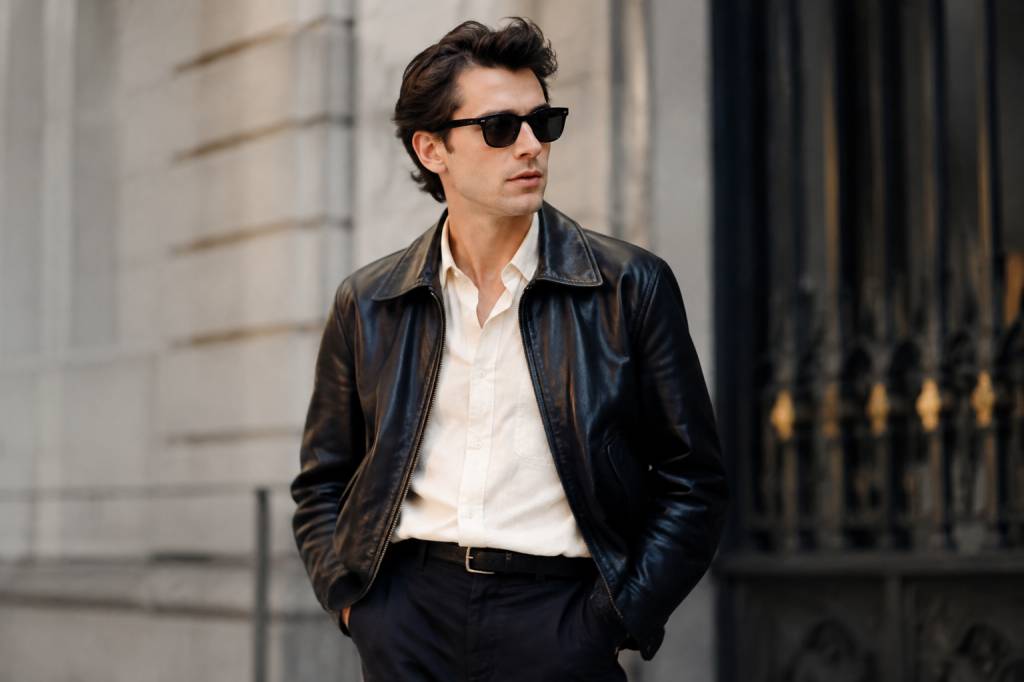
For a classic Arctic Monkeys-inspired look, choose a clean black leather jacket with minimal hardware. A racer jacket or a simple café racer style will feel sharper than a heavily studded biker jacket. Turner’s appeal comes from understatement, not from looking as though he has recently escaped a motorcycle gang convention.
A slim leather jacket works best when the leather has some softness and movement. Perfectly rigid, glossy leather can look theatrical. Matte or lightly worn leather feels more authentic and gives the outfit a little grit.
Wear it over a white or black T-shirt for a stripped-back look. For something closer to Turner’s more considered style, try a shirt underneath: black, cream, burgundy or a muted geometric print. Leave the top buttons open and let the collar sit naturally.
The fit should be close through the shoulders, with sleeves ending around the wrist. The hem can sit at the hip. Too long, and the jacket loses its sharpness; too tight, and you will look like you bought it in a moment of emotional optimism.
Shirts with attitude
Turner understands that a shirt can change the temperature of an outfit. A plain white shirt makes leather and denim feel clean. A Cuban-collar shirt introduces a touch of swagger. A dark floral or Hawaiian print brings the AM era into focus.
Look for shirts made from viscose, cotton or linen blends with enough drape to move when you walk. Stiff fabric can make a relaxed shirt appear corporate. The collar should have some presence, particularly if you plan to wear it open over a T-shirt.
Colour is where you can have fun, but keep the rest of the outfit controlled. Try:
- A black Cuban-collar shirt with charcoal trousers
- A cream shirt with dark denim and brown boots
- A muted red or burgundy shirt under a black jacket
- A restrained floral print with tailored black trousers
- A pale blue shirt worn open over a white vest or T-shirt
Turner’s shirts often feel sensual without becoming flashy. That comes down to proportion. One or two buttons open can look confident. Half the shirt unbuttoned while you stare into the middle distance may suggest that you are waiting for a music video budget.
Denim, trousers and the return of the high waist
Denim is central to Turner’s style, particularly in its darker forms. Black, indigo and washed grey jeans are versatile foundations for leather jackets, patterned shirts and tailored coats.
A slim jean remains a valid choice, but the most current interpretation is a straight or slim-straight cut. It gives the legs a clean line without creating the impression that circulation is optional. Look for a medium or high rise, especially if you want to echo Turner’s vintage-influenced tailoring.
High-waisted trousers are another important part of his wardrobe. They lengthen the leg, define the waist and instantly make a simple shirt look more deliberate. Pleated trousers in charcoal, black, tobacco or cream can bring a touch of The Last Shadow Puppets’ louche elegance to an otherwise ordinary outfit.
When wearing higher-waisted trousers, tuck in your shirt. Add a narrow leather belt and keep the footwear substantial enough to balance the shape. Chelsea boots, loafers and polished lace-up shoes all work. Avoid pairing very wide trousers with tiny, delicate shoes unless you are deliberately pursuing a difficult fashion experiment.
Footwear: boots do the heavy lifting
Turner’s footwear is usually practical, sharp and quietly masculine. Boots are the safest place to begin.
Black Chelsea boots create a sleek line under black jeans or tailored trousers. Brown suede desert boots offer a softer, more casual reference to his early style. For a more vintage mood, try lace-up leather boots with a modest heel and a rounded or almond toe.
Keep the finish considered. Scuffed boots can add character, but neglected footwear makes the whole outfit look accidental. Condition leather occasionally, brush suede regularly and replace worn laces. Style may be instinctive, but it still benefits from basic maintenance.
Retro trainers can work with Turner-inspired casual outfits, particularly in off-white, black or dark red. The key is to avoid overly technical running shoes. This is rock’n’roll tailoring, not a meeting with your personal trainer.
Outerwear beyond the leather jacket
Turner’s wardrobe becomes more interesting when you move beyond the obvious. A long wool coat, a cropped Harrington jacket, a suede trucker or a tailored overcoat can all create the same sense of drama.
A black or charcoal overcoat is especially useful. Wear it over a T-shirt, slim jeans and boots for a dark, uncomplicated outfit. For a smarter interpretation, combine it with a roll-neck and pleated trousers. The coat should sit cleanly on the shoulders and finish somewhere around the knee or just above it.
Suede is another strong choice. A tobacco or chocolate suede jacket softens the look while preserving its retro edge. It pairs naturally with denim, cream shirts and dark knitwear. Suede demands more care than leather, so protect it from heavy rain and resist treating every stain as a story worth keeping.
Colour, texture and the power of restraint
The Turner palette is rarely loud, but it is never dull. Black, white, cream, tobacco, burgundy, navy and charcoal form the foundation. Richer shades appear through velvet, suede, satin or patterned shirts.
Texture does much of the work. A smooth cotton T-shirt under rough leather creates contrast. A velvet jacket against a crisp shirt adds depth. Suede boots with wool trousers produce a softer, more tactile combination.
If you are new to this style, begin with tonal dressing. Try black jeans, a charcoal shirt and a black leather jacket. Or combine cream trousers, a beige shirt and a brown suede jacket. Similar colours make the outfit feel sophisticated, while differences in texture keep it from becoming flat.
Patterns should be treated as a controlled risk. A floral shirt or bold stripe can be excellent, but let it become the focal point. Everything else should support it rather than compete for attention.
Grooming: polished, never overworked
Hair is a significant part of Turner’s visual language. His styles have ranged from messy fringe and textured volume to slicked-back, rockabilly-inspired shapes. The common thread is movement. Even when carefully styled, the hair should not appear sealed into place.
Ask your barber for a cut that suits your hair density and face shape rather than requesting “Alex Turner”. Bring a reference image, then work with what you actually have. A textured crop, medium-length layered cut or swept-back style can all capture the spirit without producing a literal imitation.
Use a matte clay or light pomade for separation and control. Apply less than you think you need. You can always add more; you cannot easily negotiate with a helmet.
Facial hair should also look intentional. A short beard or light stubble can complement leather and vintage tailoring, but the neckline and cheek lines need occasional attention. Turner’s style may suggest rebellion, but it does not excuse looking as though you lost a bet with your razor.
The details that make the outfit personal
The difference between inspiration and imitation lives in the details. Turner’s wardrobe feels convincing because it reflects a personality rather than a shopping list.
Choose accessories with restraint: a simple watch, silver rings, narrow sunglasses or a vintage-style belt. Avoid stacking every rock-star symbol at once. One strong gesture is more powerful than six competing ones.
Pay attention to posture too. A good jacket cannot create confidence on its own. Stand comfortably, move naturally and stop adjusting your clothes every thirty seconds. The clothes should serve your presence, not become a nervous ritual.
Most importantly, let the wardrobe age. Turner’s best looks do not feel assembled from a single afternoon of online shopping. They suggest repetition, wear and personal history. Buy fewer pieces, choose better fabrics and allow your boots, jackets and denim to acquire evidence of your life.
Three Alex Turner-inspired outfits to try
The early Arctic Monkeys: Start with dark slim-straight jeans, a white T-shirt, a black leather jacket and brown desert boots. Add light stubble and a slightly textured hairstyle. Simple, direct and difficult to ruin.
The AM night-out look: Wear black jeans with a dark Cuban-collar shirt, black Chelsea boots and a leather jacket. Keep the shirt partly open, but maintain clean lines elsewhere. This is the outfit for dim bars, loud guitars and decisions made after midnight.
The vintage sophisticate: Choose high-waisted charcoal trousers, a tucked-in cream shirt, a slim belt and polished loafers or lace-up boots. Finish with a long wool coat. It is elegant without becoming precious, provided you resist the temptation to carry a cane.
Make the style yours
Alex Turner’s fashion works because it sits between contradiction and control. It is masculine but not rigid, glamorous but not polished into lifelessness, nostalgic but still recognisably modern.
Take the leather, the boots, the open collars and the dark tailoring. Then bring them into your own life. Wear the jacket on the train. Let the trousers crease. Spill something on the shirt and decide whether it has become a mark of character or simply needs washing.
The goal is not to look like Alex Turner standing under a spotlight. The goal is to develop the same sense of ease: clothes chosen with intention, worn with conviction and never allowed to become more important than the man inside them.