How solo train journeys can redefine modern masculinity and mindful travel
Why solo train journeys speak to the modern man
There is something quietly radical about a man choosing to board a train alone, with nothing but a small bag, a good book, and an open schedule. In a culture that still glorifies productivity, hustle, and constant digital connection, solo train travel rewrites the script. It becomes a moving retreat, a space to question what strength, success, and presence really look like.
Modern masculinity is slowly shifting away from the old, rigid archetypes: the man who must always be in control, always busy, always “on.” Solo train journeys create a counter-image: the man who can sit with himself, who allows time to pass without needing to conquer it, who doesn’t measure worth by unread emails or back-to-back meetings, but by the quality of his attention.
Unlike flights, where you’re strapped into a cramped seat, fighting jet lag and airport stress, or road trips, where you’re locked into the role of driver and constant decision-maker, train travel is uniquely liminal. You’re in motion, but not responsible for that motion. You can look out the window, walk to the café car, write in a notebook, listen to the low murmur of strangers, and simply exist. That in-between state is often where the most honest reflections about who you are—and who you want to be—quietly surface.
Redefining strength: solitude without isolation
For many men, being alone still carries a subtle stigma. It can feel like failure, like you were supposed to be with friends, a partner, a family, a team. Solo train journeys challenge that story. They frame solitude not as a lack, but as a deliberate choice.
There is a big difference between isolation and chosen solitude. Isolation is being cut off against your will. Solitude is time you carve out to meet yourself without distractions. On a train, you’re not hiding from the world—you’re moving through it slowly, intentionally.
This form of quiet strength has several layers:
- Willingness to disconnect from constant validation and social noise.
- Ability to face your own thoughts without immediately sedating them with screens.
- Confidence to be seen alone in public spaces, comfortable in your own company.
Those are not the traits traditionally highlighted in “masculine” role models, yet they’re increasingly the ones that matter in a world where burnout, anxiety, and superficial connection are the norm. A solo train journey becomes a low-key rite of passage: a test of whether you can stand being with yourself, without distraction, and still feel whole.
The train as a moving mindfulness studio
Mindfulness is one of those words that gets thrown around a lot, often stripped of its weight. But at its core, it’s simple: paying attention, on purpose, in the present moment, without judgment. Trains are incredibly well-suited to this.
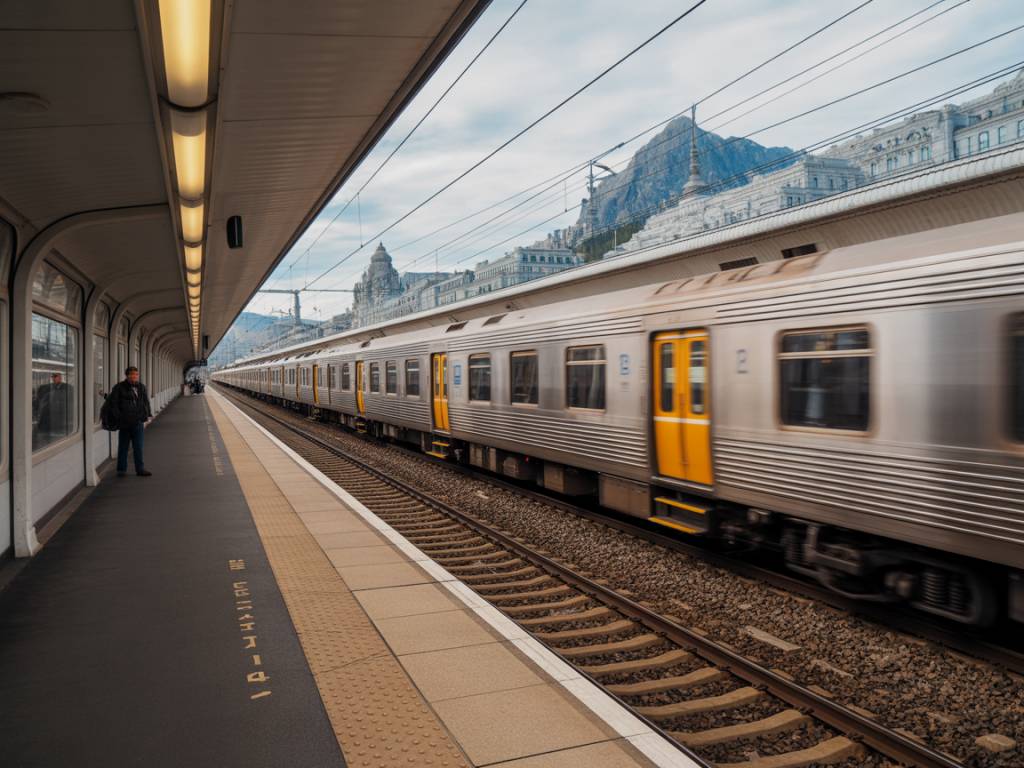
You’re forced into a slower rhythm. Landscapes do not flash by at the speed of a highway; they roll past in layers—fields, small towns, stations where people get on and off, little glimpses of other lives. The tempo of a train encourages you to notice details, to feel the gentle sway of the carriage, to track your own breathing, to notice how your mind moves between memories, plans, and daydreams.
Mindful travel isn’t about visiting the most Instagrammable places—it’s about how present you are while you move. On a train, you can:
- Watch the countryside unfold instead of staring at a flickering notification bar.
- Pay attention to the physical sensations: the seat beneath you, the warmth of a coffee cup, the low hum of the engine.
- Listen to the rhythm of the tracks as a kind of moving meditation.
- Journal about your thoughts in real time, as they’re shaped by the changing scenery.
Men are rarely encouraged to develop this kind of internal awareness. Yet it’s crucial for emotional intelligence, resilience, and healthy relationships. Solo train travel offers a framework where practicing it feels natural instead of forced.
Letting go of control: a new lesson in masculinity
Traditional masculinity often equates manhood with control: over time, over outcomes, over emotions. Train travel subverts that. You don’t control the route, the speed, or the schedule beyond choosing when to board. Delays may happen. Weather might shift. You might share a compartment with talkative strangers or sit in silence for hours.
For many men, this surrender is uncomfortable at first. But once you lean into it, it becomes liberating. You discover you don’t need to be the one driving to feel secure. You don’t need to micromanage everything to feel capable. You can let the journey unfold and respond as it comes.
This taps into a healthier model of masculinity:
- Less about domination, more about adaptability.
- Less about rigid stoicism, more about honest self-awareness.
- Less about always “doing,” more about learning how to “be.”
Learning to coexist with uncertainty—without anger or panic—is a quiet but powerful skill. A solo train ride is a safe, low-stakes arena to practice it.
Building a ritual of intentional packing
The way you pack for a solo train journey can become its own mindfulness ritual. Instead of stuffing a suitcase with “just-in-case” items, you’re forced to ask what you truly need for comfort, reflection, and presence.
Think of your bag as a curated toolkit for a reset. Some thoughtfully chosen items can support both your sense of ease and your deeper inner work while traveling:
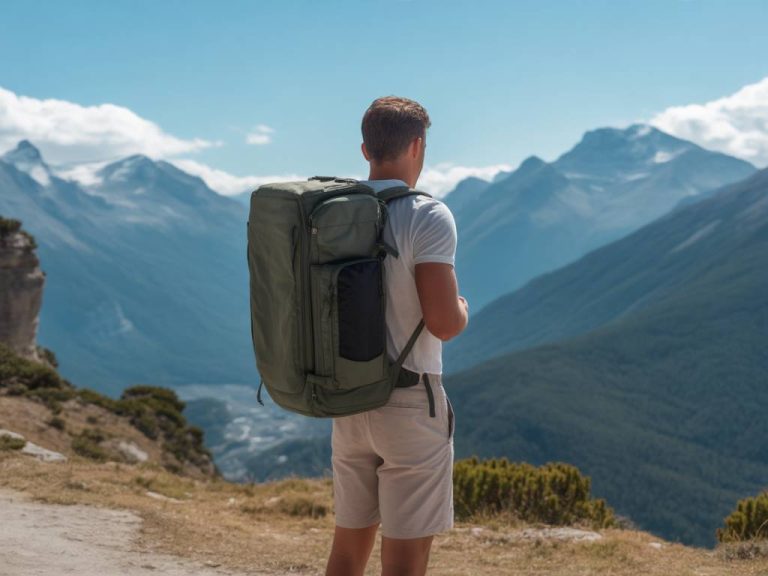
- A quality weekender bag or backpack: Something durable, streamlined, and comfortable to carry through stations and platforms. Look for strong zippers, solid straps, and a design that fits under seats or in overhead racks.
- Noise-canceling or over-ear headphones: Not to escape the experience, but to shape it. You can create your own soundscape—ambient music, jazz, or even guided meditations—without competing with carriage noise.
- A physical notebook or journal: Writing by hand slows your thinking. Use it to track thoughts, questions about your life, or things you notice about people and places along the route.
- A slim, well-made pen: Underestimated, but crucial. A pen that feels good in your hand invites you to write more.
- A good book: Ideally something that deepens your reflection—about travel, identity, or inner life—rather than just helping you kill time.
- A compact travel grooming kit: A small dopp kit with essentials (face wash, moisturizer, deodorant, maybe a solid cologne) helps you feel grounded in your body and signals to your mind that you deserve care, even on the move.
- Reusable water bottle and healthy snacks: Hydration and stable energy levels can make the difference between a numbing, foggy trip and one where you feel clear, attentive, and calm.
Each item you carry should earn its place. When you travel light and intentional, you’re already starting the mental shift away from distraction and clutter toward focus and clarity.
From external performance to inner alignment
Well into adulthood, many men still find themselves performing a version of themselves: the successful professional, the reliable partner, the funny friend, the problem-solver. Those roles can be meaningful, but they can also become masks that are hard to take off.
Being alone on a train—hours of forward motion, no immediate obligations—creates space beneath the performance. As the scenery changes, so do your layers of self. You may find yourself asking:
- Do I still believe in the goals I’m chasing, or am I on autopilot?
- What version of “success” actually feels healthy and sustainable for me?
- Which relationships in my life are nourishing—and which are quietly draining?
- What kind of man do I want to be in five or ten years, beyond job titles or income?
These are not questions you can answer between notifications or in a five-minute break between meetings. They require mental spaciousness. Train travel gives it to you in a way that feels natural rather than forced. You’re literally watching the world move by while your inner landscape begins to rearrange itself as well.
Human connection on your own terms
Solo travel doesn’t have to mean constant isolation. In fact, trains might be one of the last public spaces where organic, low-pressure conversations still happen. You might share a table with a retired couple, a student, a parent with kids, another solo traveler. You can choose to talk—or not.
What’s different is that the choice is entirely yours. No one expects you to perform. You can be quiet, observant, and authentic. If you do decide to speak, you’re stepping into connection from a place of self-possession, not social obligation.
For men who feel drained by performative social life—loud bars, forced networking, endless small talk—this can be a refreshing reset. You remember that you’re capable of simple, human connection without having to impress anyone.
Turning a solo train journey into a personal reset
You don’t need an epic, cross-continent route for this to matter. Even a few hours on a regional train can become a powerful ritual if you approach it with intention. Consider framing your next solo ride as a reset, not just a way to get from A to B. You might:
- Set a quiet intention before boarding: something like “I’m using this journey to check in with myself honestly.”
- Put your phone on airplane mode for at least part of the trip, creating a small island of digital silence.
- Use the first half of the journey to simply observe: your surroundings, your thoughts, the people around you.
- Use the second half for journaling, reading, or outlining changes you want to make in your daily life.
Modern masculinity doesn’t need more noise, speed, or armor. It needs space, honesty, and practices that bring men back into their own bodies and minds. Solo train journeys offer that—quietly, steadily, without demanding a big speech or a dramatic reinvention.
All you have to do is step onto the platform with intention, travel light, and give yourself permission to be present for the ride. In a world obsessed with destinations, that simple act—choosing to inhabit the journey—might be one of the most quietly radical things a man can do today.
À propos de l'auteur